





























Your Arguments Aren’t About the Dishes They’re About Unmet Childhood Needs Playing Out
Most relationship arguments aren’t about chores or communication they’re about unmet childhood needs resurfacing in adulthood. This deep, reflective article explores how unresolved emotional wounds shape conflict and how healing the root restores connection, safety, and intimacy.

Why the Real Conflict in Your Relationship Started Long Before You Met
Most couples believe they are arguing about chores, money, tone of voice, parenting styles, or time management. On the surface, it looks like frustration over dirty dishes left in the sink, a forgotten errand, or a partner who didn’t listen. But beneath these everyday conflicts lives a deeper truth most people never stop to examine: your arguments are rarely about the present moment they are about unresolved childhood needs resurfacing in adulthood.
Download the marriage conflict de-escalation guide
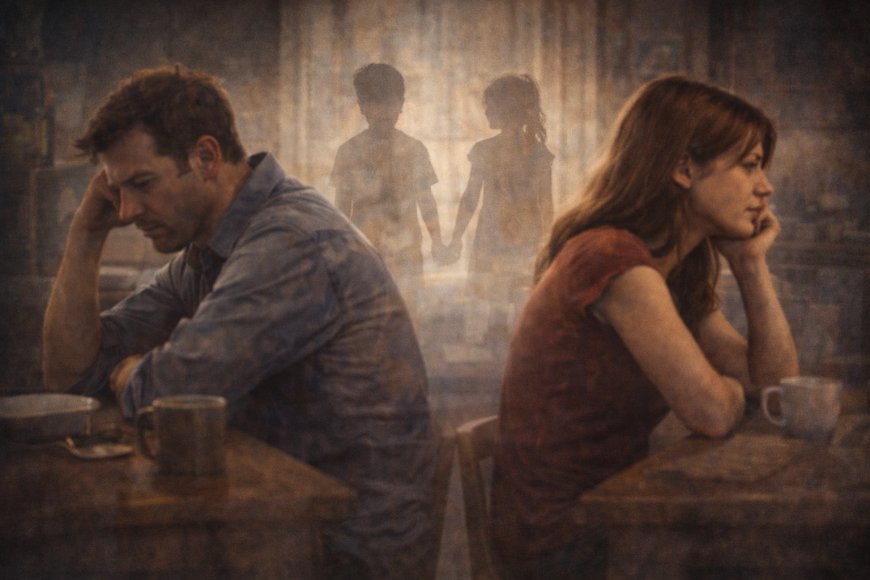
When conflict feels intense, emotional, or disproportionate to the issue at hand, it’s a sign that something older is being touched. The nervous system does not distinguish between past and present; it reacts to familiar emotional patterns. What looks like an argument about dishes is often the inner child reacting to feeling unseen, unvalued, unappreciated, or unsafe again.
Many adults enter relationships carrying invisible emotional contracts formed in childhood. As children, we learned what love felt like, how attention was given or withheld, how needs were responded to, and whether our emotions were welcomed or dismissed. These early experiences quietly shape our expectations of intimacy. When those expectations are not met, the reaction is not logical it is emotional, embodied, and deeply personal.
For someone who grew up feeling overlooked, a partner forgetting a task may trigger a familiar ache of invisibility. For someone raised in a home where love was conditional, criticism can feel like rejection rather than feedback. For someone who had to grow up too fast, unequal emotional labor in marriage can awaken resentment rooted in childhood over-responsibility. These reactions are not about the dish, the tone, or the moment they are about the meaning the moment awakens.
This is why some arguments escalate quickly. The body goes into fight-or-flight, the voice rises, defensiveness takes over, and logic disappears. In those moments, you are not just a spouse you are a child trying to protect an old wound. Your partner, often unknowingly, becomes the stand-in for someone from your past who failed to meet your needs. The argument becomes less about resolution and more about survival.
Unmet childhood needs often show up in relationships as emotional hunger. You may crave reassurance but feel ashamed to ask for it. You may expect your partner to “just know” what you need because no one ever asked you as a child. You may interpret neutrality as abandonment, boundaries as rejection, or independence as disconnection. Without awareness, couples begin fighting each other instead of understanding the wound speaking underneath the conflict.
What makes this dynamic even more painful is that both partners are often wounded at the same time. One partner’s withdrawal triggers the other’s fear of abandonment. One partner’s criticism triggers the other’s shame. One partner’s silence triggers the other’s anxiety. Two nervous systems are reacting to the past while standing in the present, each feeling misunderstood, unseen, and unsafe.
Healing begins when couples learn to pause and ask a different question. Instead of asking, “Why are you doing this to me?” the deeper question becomes, “What does this situation remind me of?” When you identify the childhood need beneath the reaction the need for safety, appreciation, reassurance, consistency, or emotional presence the conflict shifts. Compassion replaces accusation. Curiosity replaces defensiveness.
This does not mean excusing harmful behavior or avoiding accountability. It means recognizing that lasting connection is built when couples address the root, not just the symptom. Communication becomes less about winning arguments and more about understanding emotional histories. Boundaries become clearer. Triggers become opportunities for healing rather than weapons of division.
When couples learn to heal the core wound, arguments soften. Emotional regulation improves. Safety increases. Intimacy deepens. Partners stop fighting each other and start standing together against the real enemy unhealed pain.
Your relationship doesn’t need more arguments.
It needs more awareness.
It needs healing at the root.
Because when childhood wounds are acknowledged and tended to, love no longer has to carry the weight of the past.
Visit our website www.gracengrit.info .
What's Your Reaction?
 Like
0
Like
0
 Dislike
0
Dislike
0
 Love
0
Love
0
 Funny
0
Funny
0
 Angry
0
Angry
0
 Sad
0
Sad
0
 Wow
0
Wow
0