































10 Signs Your Childhood Is Still Affecting Your Adult Life
Discover 10 powerful signs your childhood may still be shaping your emotions, relationships, confidence, and decisions and learn practical steps to begin your healing journey.

10 Signs Your Childhood Is Still Affecting Your Adult Life (And How to Begin Healing)

Have You Ever Wondered…
Why you overthink every conversation?Why criticism hurts more than it seems to hurt everyone else?
Why you feel guilty for saying "no"?Why you constantly chase approval, even when you're exhausted?
Why healthy love sometimes feels unfamiliar, while emotionally unavailable people feel strangely attractive?Or why, despite reading books, listening to podcasts, attending church, praying, or working on yourself, some emotional patterns keep showing up?
If you've ever asked yourself these questions, you're not alone.
Many adults spend years trying to fix behaviors without ever understanding where those behaviors began.
They blame themselves, they call themselves "too emotional," "too needy," "too sensitive," or "too broken."
But what if the issue isn't that you're broken?
What if your mind and emotions simply adapted to experiences you had long before you had the words to understand them?
The truth is, childhood doesn't end when we become adults.
Its lessons often continue shaping how we think, love, trust, communicate, and see ourselves.
Not because we're weak.
But because childhood is where we first learned what love looked like, whether our emotions were welcome, how conflict was handled, and whether the world felt emotionally safe.
Those early experiences quietly become the lens through which we interpret adulthood.
The encouraging news?
Patterns can be changed.
Awareness is where healing begins.
This article isn't about blaming your parents or staying stuck in the past. It's about understanding your story so you can make healthier choices moving forward. Whether your childhood included emotional neglect, criticism, inconsistency, family conflict, or simply unmet emotional needs, recognizing the impact is the first step toward building a different future.
Let's explore ten signs your childhood may still be influencing your adult life and what you can begin doing about it.
Why Your Childhood Still Matters
As children, our brains are constantly learning.Not just academic skills, but emotional lessons.
Without realizing it, we begin answering questions like:
- Am I safe?
- Do my feelings matter?
- Can I trust people?
- Is love consistent?
- Am I worthy of love just as I am?
- What happens when I make mistakes?
- Is asking for help safe?
The answers to these questions become part of the beliefs we carry into adulthood.
A child who was praised only when they achieved may become an adult who believes their worth depends on performance.
A child whose emotions were dismissed may grow into an adult who struggles to express vulnerability.
A child who had to stay quiet to avoid conflict may become an adult who fears setting boundaries.
These are adaptations ways of coping with the environment you grew up in. They often helped you survive then, but they may no longer serve the life and relationships you want today.
Healing begins when you gently examine those old patterns with curiosity rather than shame.
Sign #1: You Constantly Feel Like You're Not Good Enough
You could receive ten compliments, yet the one criticism is the only thing you remember.
You achieve a goal, but instead of celebrating, you immediately focus on what you haven't done.
You compare yourself to others and wonder why everyone else seems more capable, more confident, or more deserving.
This persistent feeling of "not enough" often has deep roots.
Perhaps you grew up in an environment where love felt conditional, praise was scarce, or mistakes were met with harsh criticism. Over time, you may have internalized the belief that your value depends on your performance rather than your inherent worth.
As an adult, this can show up as perfectionism, imposter syndrome, burnout, or an endless pursuit of external validation.
Reflection
Ask yourself:
- When did I first start believing I wasn't enough?
- Whose voice does my inner critic sound like?
- What evidence do I have today that challenges that belief?
A Healthier Alternative
Practice acknowledging your efforts, not just your outcomes. Begin speaking to yourself with the same compassion you would offer a close friend who was learning and growing.
Sign #2: You Find It Difficult to Set Healthy Boundaries
Do you say "yes" when you really want to say "no"?
Do you feel responsible for other people's happiness?
Do you avoid difficult conversations because you fear rejection or conflict?
Many people who grew up in emotionally unpredictable homes learned that keeping others happy was the safest way to maintain peace.
As children, they may have discovered that expressing needs led to criticism, dismissal, or tension. So they became accommodating, self-sacrificing, and hyperaware of everyone else's emotions.
These strategies may have protected them then, but in adulthood they can lead to exhaustion, resentment, and relationships where their own needs are consistently overlooked.
Healthy boundaries are not selfish. They are an act of self-respect and a foundation for emotionally healthy relationships.
Sign #3: You Apologize for Everything Even When You Haven't Done Anything Wrong
"I'm sorry..."
It's become almost automatic.
Someone bumps into you—you apologize.
Someone misunderstands you—you apologize.
Someone treats you poorly—you apologize for "causing trouble."
You shrink yourself to make other people comfortable.
If this sounds familiar, your apology may not simply be about good manners. It may be a survival strategy you learned long ago.
Many children who grow up in highly critical, emotionally unpredictable, or conflict-filled environments become hyper-aware of other people's emotions. They learn to anticipate disappointment, diffuse tension, and take responsibility for keeping the peace even when the problem isn't theirs.
As adults, they often carry an invisible burden:
-
Feeling responsible for everyone's emotions.
-
Believing they're "too much."
-
Walking on eggshells.
-
Struggling to express disagreement.
-
Feeling guilty for simply taking up space.
Over time, constant apologizing can quietly erode your confidence. It teaches your mind that your needs, opinions, and feelings are somehow less important than everyone else's.
Reflection
Ask yourself:
-
Do I apologize because I genuinely made a mistake or because I'm afraid of disappointing someone?
-
What would it feel like to replace "I'm sorry" with "Thank you for your patience" or "I appreciate your understanding"?
Learning to speak without unnecessary apology is not arrogance it's a sign that you're beginning to believe your voice deserves space.
Sign #4: You Fear Being Rejected or Abandoned
One delayed text message can ruin your entire day.
A change in someone's tone makes you wonder if they're upset with you.
You constantly seek reassurance that people still care.
You overanalyze conversations.
You replay interactions in your head, searching for evidence that you've done something wrong.
This isn't because you're "needy."
For many people, these fears began in childhood.
Perhaps affection was inconsistent. Maybe caregivers were emotionally unavailable, frequently absent, or unpredictable. You may have learned that love could disappear without warning or that you had to earn attention by behaving a certain way.
As an adult, those early experiences can make ordinary relationship challenges feel far more threatening than they are.
You might:
-
Stay in unhealthy relationships because you're afraid of being alone.
-
Ignore red flags to avoid another goodbye.
-
Become overly accommodating in hopes that people won't leave.
-
Panic whenever someone creates emotional distance.
A Gentle Reminder
Not everyone who needs space is abandoning you.
Healthy relationships allow room for individuality, disagreement, and temporary distance without threatening the bond.
One of the most healing questions you can ask yourself is:
"Am I responding to what is happening today or to what happened years ago?"
Sign #5: You Struggle to Trust People
Trust isn't simply about believing someone will tell the truth.
It's believing they'll be emotionally safe.
It's believing they'll keep their word.
It's believing they'll stay when life becomes difficult.
If your childhood taught you that promises were often broken, emotions weren't safe to express, or adults couldn't be relied upon, trusting others may feel risky.
You may find yourself:
-
Keeping people at a distance.
-
Expecting disappointment.
-
Assuming hidden motives.
-
Testing people before allowing yourself to become emotionally close.
-
Ending relationships before the other person has the chance to leave.
While these strategies may feel protective, they can also keep you from experiencing the deep, secure connections you long for.
Healing doesn't mean trusting everyone.
It means learning to recognize who has earned your trust and allowing yourself to receive healthy love when it is offered.
Sign #6: You Constantly Seek Validation From Others
You know you're capable.
Yet somehow, it never feels enough until someone else confirms it.
You ask multiple people for advice before making a decision.
You depend heavily on praise to feel confident.
Criticism feels devastating.
Approval feels addictive.
This often develops when children grow up believing that love must be earned through achievement, obedience, perfection, or people-pleasing.
Instead of developing an internal sense of worth, they become dependent on external validation.
The challenge is that no amount of compliments can permanently heal an identity built on approval.
Soon, one compliment isn't enough.
Then ten aren't enough.
The cycle continues.
Real confidence grows when your sense of value comes from within rather than constantly seeking permission from others to believe in yourself.
Reflection
Complete this sentence:
"If nobody applauded me, I would still be proud that I..."
That answer tells you far more about your authentic identity than any external praise ever could.
Pause and Reflect
Before moving on, take a moment to notice what you've discovered about yourself.
Awareness isn't meant to create shame it creates choice.
You may recognize yourself in one sign, or in several. That doesn't mean you're permanently defined by your past. It means you've identified patterns that can be understood, challenged, and gradually reshaped.
Healing rarely happens all at once. It often begins with small moments of honesty like this one.
As you continue reading, remember: the goal isn't to blame your childhood. It's to understand how it may have shaped you so you can intentionally become the person you want to be.
Sign #7: You Feel Responsible for Fixing Everyone
You walk into a room and immediately notice who looks upset.
You can sense tension before anyone says a word.
Someone shares a problem, and within seconds you're trying to solve it.
You often carry emotional burdens that don't belong to you.
You become everyone's counselor, mediator, rescuer, or peacemaker.
But when was the last time someone asked how you were doing?
For many adults, this pattern didn't begin with kindness it began with survival.
Perhaps as a child, you learned to read everyone's moods because it helped you avoid conflict.
Maybe you became the "good child," the responsible one, the peacekeeper, or the emotional support for a struggling parent.
Some children become what psychologists call parentified they take on emotional or practical responsibilities that are beyond what is appropriate for their age. Others learn that their own needs come second because the family's needs always come first.
Over time, this can create adults who believe:
-
"My value comes from helping others."
-
"If people are unhappy, it's my job to fix it."
-
"I don't deserve rest until everyone else is okay."
-
"If I stop giving, people won't love me."
While compassion is a beautiful quality, carrying responsibility for everyone else's emotional well-being is exhausting.
Healthy relationships involve support, but they don't require self-sacrifice.
Reflection
Ask yourself:
-
Do I offer help because I genuinely want to or because I feel guilty if I don't?
-
What emotional responsibilities am I carrying that don't actually belong to me?
A Healthier Alternative
Practice reminding yourself:
"I can care about someone without carrying what belongs to them."
Supporting someone is different from rescuing them.
Sign #8: You Don't Know Who You Really Are
One of the quietest consequences of an emotionally difficult childhood is losing touch with yourself.
For years, you may have become whoever other people needed you to be.
The obedient child.
The achiever.
The caretaker.
The quiet one.
The funny one.
The invisible one.
The independent one.
Those roles may have helped you survive.
But survival roles are not the same as identity.
As an adult, this can sound like:
"I don't know what I want."
"I've spent my whole life making everyone else happy."
"I don't even know what brings me joy."
"I've achieved success, but I still feel empty."
When you've spent years adapting to other people's expectations, discovering your authentic self can feel unfamiliar.
The good news is that identity isn't something you have to invent.It's something you gradually uncover.
Healing often involves asking questions you were never invited to ask as a child:
-
What do I enjoy?
-
What are my values?
-
What kind of relationships make me feel emotionally safe?
-
What dreams have I ignored?
-
Who am I when I'm not trying to impress anyone?
Identity grows every time you make choices that align with your values instead of your fears.
Sign #9: Rest Makes You Feel Guilty
Do you struggle to relax?
When you're sitting down, do you immediately think about everything you "should" be doing?
Do you feel lazy when you take a break?
Many adults wear busyness like a badge of honor.
But sometimes constant productivity isn't ambition it's anxiety.
If you grew up believing your worth depended on achievement, obedience, or being useful, slowing down can feel uncomfortable.
Your body may associate rest with laziness.
Your mind may tell you that you haven't earned a break.
So you stay busy.
You overwork.
You overcommit.
You keep producing.
Not because you love it but because stopping feels unsafe.
The challenge is that constant busyness leaves very little room for reflection, connection, creativity, or emotional healing.
Rest is not a reward for exhaustion.Rest is part of being human.
Reflection
Complete this sentence:
"I feel guilty resting because..."
Write whatever comes to mind without judging yourself.
You may discover beliefs you've carried for decades without realizing it.
Sign #10: You Keep Repeating the Same Relationship Patterns
Different faces.
Different names.
Different places.
The same emotional outcome.
Maybe you keep attracting emotionally unavailable partners.
Maybe friendships always become one-sided.
Maybe you repeatedly lose yourself in relationships.
Maybe every disagreement feels like the relationship is ending.
When the same patterns appear over and over, it's worth becoming curious rather than critical.
Ask yourself:
"What am I unconsciously choosing because it feels familiar?"
Our brains naturally gravitate toward what feels known even when it isn't healthy.
If inconsistency, criticism, emotional distance, or unpredictability were familiar growing up, healthier relationships may initially feel unfamiliar.
Healing isn't about finding perfect people.
It's about becoming emotionally healthy enough to recognize relationships built on respect, honesty, consistency, and mutual care.
The more aware you become of your patterns, the more freedom you have to make different choices.
Healing Doesn't Mean Erasing Your Past
Many people believe healing means pretending the past never happened.
It doesn't.
Healing means the past no longer has the final say in how you live today.
It means learning to respond instead of automatically reacting.
It means recognizing old survival strategies and asking,
"Does this still serve the life I'm trying to build?"
Healing isn't about becoming someone else.
It's about returning to the person you were always capable of becoming before fear, shame, criticism, rejection, or emotional neglect taught you to hide.
Some days your progress will feel obvious.
Other days you'll notice old habits resurfacing.
That's okay.
Growth is rarely linear.
What matters is that each time you become aware of a pattern, you have another opportunity to choose differently.
Every boundary you set.
Every honest conversation you have.
Every act of self-compassion.
Every time you challenge an old belief.
Every time you choose emotional health over survival.
You are rewriting your story one decision at a time.
And that is something worth celebrating.
Final Reflection
Before you leave this page, pause for a moment.
Ask yourself these questions:
-
Which sign resonated with me the most?
-
What childhood message am I still carrying into adulthood?
-
What belief about myself needs to be challenged?
-
What would my life look like if I truly believed I was worthy of love, respect, and emotional safety?
-
What is one small step I can take this week toward healing?
Awareness is not about dwelling on the past.
It is about understanding it well enough that it no longer quietly shapes every decision you make.
Your childhood may explain some of your patterns.
But it does not have to define your future.
The story you've lived so far is important.
But it is not the only story you get to tell.
The next chapter can be written with greater awareness, healthier relationships, stronger boundaries, deeper self-worth, and renewed hope.
And that chapter begins with one courageous decision:
To stop surviving and start healing.

Ready to Begin Your Healing Journey?
If this article felt like someone was finally putting words to what you've been carrying for years, know this:
You don't have to figure it all out on your own.
Healing doesn't happen because you read one article. It happens through consistent self-awareness, intentional reflection, practical tools, and the courage to take the next step one day at a time.
At Grace N Grit Coaching, I help individuals heal from childhood emotional wounds, rebuild their identity, strengthen their self-worth, develop emotional resilience, and create healthier relationships with themselves and others.
Whether you're feeling stuck in old patterns, struggling with boundaries, recovering from emotional pain, or simply longing to understand yourself more deeply, there is hope and there is a path forward.
🎁 Download Your Free Workbook
The Childhood Wounds Self-Discovery Workbook
This free guided workbook will help you:
-
Identify childhood experiences that may still be influencing your life.
-
Recognize emotional triggers and recurring patterns.
-
Explore your core beliefs about yourself and relationships.
-
Begin healing through practical reflection exercises and journal prompts.
-
Take your first intentional steps toward emotional freedom.
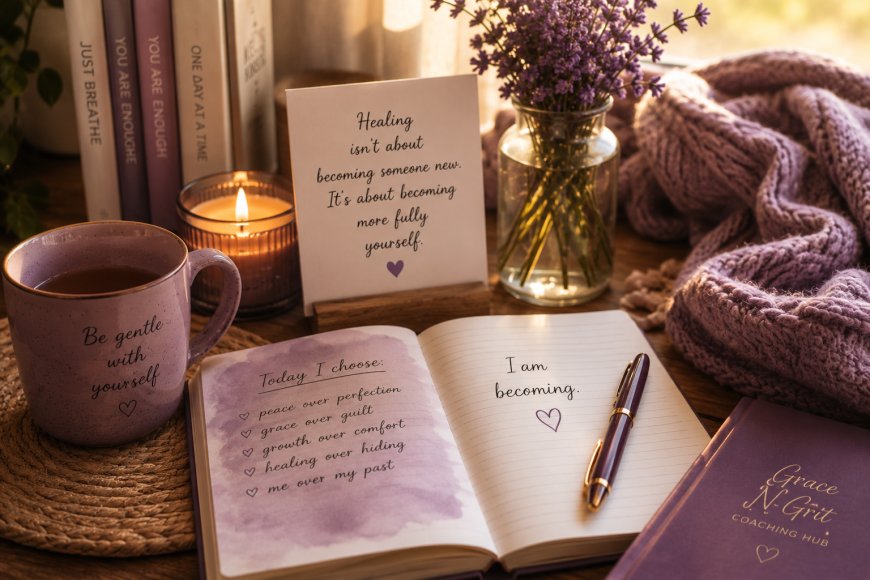
👉 Download your free copy and start your healing journey today.
👉 https://grace-n-grit-coaching-hub.kit.com/10-signs
Continue Growing with Grace N Grit Coaching
If you're ready to go beyond awareness and begin lasting transformation, I'd love to support you through coaching.
Together, we'll work to:
-
Build healthier emotional habits.
-
Strengthen your confidence and self-worth.
-
Break unhelpful relationship patterns.
-
Develop healthy boundaries and communication skills.
-
Create practical strategies that support lasting personal growth.
Every healing journey is unique, and coaching provides a supportive space to reflect, learn, and move forward with clarity and purpose.
Book your coaching session today through our website link and take the next step toward becoming the emotionally healthy, confident, and resilient person you were created to be.
Join the Grace N Grit Community
Every week I share practical emotional wellness tools, relationship insights, reflection exercises, and encouragement designed to help you grow with intention.
When you join my email community, you'll receive:
-
Exclusive articles not published on the blog.
-
Free worksheets and downloadable resources.
-
Early access to webinars and masterclasses.
-
Practical coaching tips you can apply immediately.
-
Encouragement for every stage of your healing journey.
Your healing journey doesn't end here it's just beginning.
Subscribe today and let's grow together, one courageous step at a time.
What's Your Reaction?
 Like
0
Like
0
 Dislike
0
Dislike
0
 Love
0
Love
0
 Funny
0
Funny
0
 Angry
0
Angry
0
 Sad
0
Sad
0
 Wow
0
Wow
0