


































How to Rebuild Trust After Infidelity: 10 Steps to Heal Your Marriage
Can trust be rebuilt after infidelity? Learn how couples can begin healing betrayal, rebuilding emotional safety, restoring communication, and creating a healthier marriage.

10 Steps to Heal Your Marriage
There is a particular kind of pain that comes with discovering that the person you trusted has been unfaithful.
It isn't only the affair that hurts.
It is the questions that come after.
What else don't I know?
How long has this been happening?
Was any of it real?
How could you look at me and lie?
Can I ever trust you again?
And perhaps one of the hardest questions of all:
Can our marriage ever feel safe again?
Infidelity can shake the foundation of a relationship because trust is not simply about believing that your spouse loves you. Trust is also the expectation that the person beside you will be honest with you, protect the relationship, respect agreed boundaries, and tell you the truth even when the truth is uncomfortable.
So when betrayal happens, the injured partner may find themselves questioning not only their spouse, but their own judgment.
You may find yourself checking phones, questioning timelines, replaying conversations, noticing things you never noticed before, or becoming anxious when your spouse is unavailable.
And the spouse who was unfaithful may feel ashamed, defensive, overwhelmed by guilt, or desperate for the relationship to “go back to normal.”
But here is something important:
After infidelity, normal cannot simply be resumed. Trust has to be rebuilt.
And rebuilding trust is not about pretending the betrayal didn't happen.
It is about creating enough honesty, safety, consistency and repair that the relationship can eventually become trustworthy again.
First, Understand What Infidelity Actually Damaged
When people talk about cheating, they often focus on the sexual or romantic betrayal.
But the damage can go much deeper.
Infidelity can disrupt emotional safety, communication, assumptions about the relationship, confidence in your partner's words, and the sense that you understand the person you married.
The betrayed spouse may think:
"If I didn't know this was happening, what else don't I know?"
That question can make ordinary situations feel threatening.
A late meeting becomes suspicious.
A phone notification becomes triggering.
A change in routine becomes something to investigate.
Even affection can become confusing.
"Are you being affectionate because you genuinely want to be close to me, or because you're trying to make up for what happened?"
This is why rebuilding trust requires more than saying, “I'm sorry.”
An apology may open the door.
Consistency is what begins to rebuild what was broken.

1. The Affair Has to Actually End
Trust cannot be rebuilt while the betrayal is still continuing.
This sounds obvious, but it is foundational.
If the person who was unfaithful is still communicating with the affair partner, hiding contact, maintaining secret accounts, deleting messages, or keeping another relationship emotionally alive, the marriage does not yet have the conditions necessary for genuine rebuilding.
There needs to be a clear decision about what happens next.
That includes appropriate boundaries around the person involved in the affair and any circumstances that could continue to undermine the marriage.
If contact is unavoidable because of work, business, children or another practical circumstance, the couple may need very clear boundaries around what that contact looks like.
Rebuilding trust requires clarity.
You cannot build safety on secrecy.
2. Stop Expecting the Hurt to Disappear Quickly
One of the most painful things for couples after infidelity is that the two partners may be operating on completely different timelines.
The spouse who cheated may be thinking:
"I said I'm sorry. I told you the truth. Why are we still talking about this?"
Meanwhile, the betrayed spouse may be thinking:
"You experienced this as something that happened. I experienced it as something that changed my understanding of our entire marriage."
Healing does not always happen according to a neat schedule.
There may be good days when you feel close again and then something unexpectedly triggers the pain.
A date.
A song.
A place.
A phone notification.
A memory.
A question you suddenly realize you never asked.
That doesn't necessarily mean the marriage is going backwards.
Sometimes healing looks less like forgetting and more like gradually becoming less controlled by what happened.
So don't turn healing into a race.
The goal isn't to stop talking about the betrayal as quickly as possible. The goal is to eventually be able to talk about it without it controlling the entire relationship.
3. Radical Honesty Has to Replace Secrecy
If trust was broken through deception, continued secrecy will make rebuilding almost impossible.
The betrayed spouse needs enough information to understand what happened and make sense of their reality.
That does not mean repeatedly exposing someone to unnecessary graphic details.
There is a difference between honesty that helps someone understand what happened and information that simply creates additional emotional injury.
The couple may need honest conversations about what happened, how the relationship developed, what boundaries were crossed, what was hidden, and what needs to change moving forward.
The spouse who was unfaithful has an important responsibility here:
Don't make your partner drag the truth out of you.
Discovering another piece of information weeks or months later can reopen wounds that had begun to heal.
Every new discovery can create another:
"What else have you not told me?"
And that question takes you back to the beginning.
4. Don't Make the Betrayed Partner Responsible for Your Shame
Guilt and shame can become complicated after infidelity.
The unfaithful spouse may genuinely feel terrible.
They may cry.
They may feel disgusted with themselves.
They may say, “I hate what I've done.”
But the betrayed partner should not suddenly have to become the person comforting the one who caused the injury.
There is a difference between:
“I feel terrible about what I did.”
and
“I understand that what I did caused you pain, and I'm willing to sit with that pain without becoming defensive.”
The second one creates more space for healing.
Taking responsibility means being willing to hear:
"This hurt me."
without immediately responding:
"But you also..."
There may eventually be space to address problems that existed in the marriage.
But those conversations should not be used to justify the betrayal.
Relationship problems can be discussed without turning them into excuses for infidelity.
5. The Betrayed Partner Needs Permission to Have Questions
After betrayal, questions are often part of trying to reconstruct reality.
"When did it start?"
"What did you tell them about me?"
"Were you emotionally involved?"
"What were you looking for?"
"Why didn't you tell me you were unhappy?"
Some questions may be difficult.
Some conversations may need to happen more than once.
The goal should not be interrogation forever.
But neither should the betrayed partner be shamed for needing clarity.
There needs to be room for honest questions while also creating boundaries around how those conversations happen.
If every question becomes an argument, the injured partner may learn:
“I can't safely ask anything.”
And that creates another layer of emotional distance.
6. Rebuilding Trust Means Becoming Predictable Again
Trust is often rebuilt through very ordinary things.
Not grand romantic gestures.
Not expensive gifts.
Not dramatic promises.
Consistency.
If you say you're going somewhere, communicate.
If you promise to call, call.
If plans change, explain.
If you make a commitment, follow through.
If your spouse tells you something is triggering them, don't automatically mock or dismiss it.
Over time, these small experiences begin communicating:
"Your words and your actions are becoming aligned again."
Trust grows when someone repeatedly experiences you as honest, predictable and accountable.
Consistency is boring and that is exactly why it is powerful.
7. Rebuild Emotional Safety Before Demanding Physical Intimacy
Sometimes couples try to jump straight back into physical intimacy because they want to prove that everything is okay.
But intimacy can feel complicated after betrayal.
The betrayed spouse may struggle with comparison.
They may wonder whether their spouse desires them.
They may question whether sex is genuine connection or an attempt to move past the uncomfortable conversations.
This is why rebuilding intimacy often needs to begin outside the bedroom.
Talk.
Listen.
Sit together.
Hold hands.
Go for a walk.
Laugh again.
Share something vulnerable.
Create a moment where neither of you is discussing bills, children or problems.
Your own Marriage Reconnection Reset™ is built around this principle: reconnection can begin through curiosity, conversation, appreciation, affection and emotional safety rather than demanding immediate sexual closeness.
Physical intimacy becomes much easier to rebuild when emotional safety is being rebuilt alongside it.
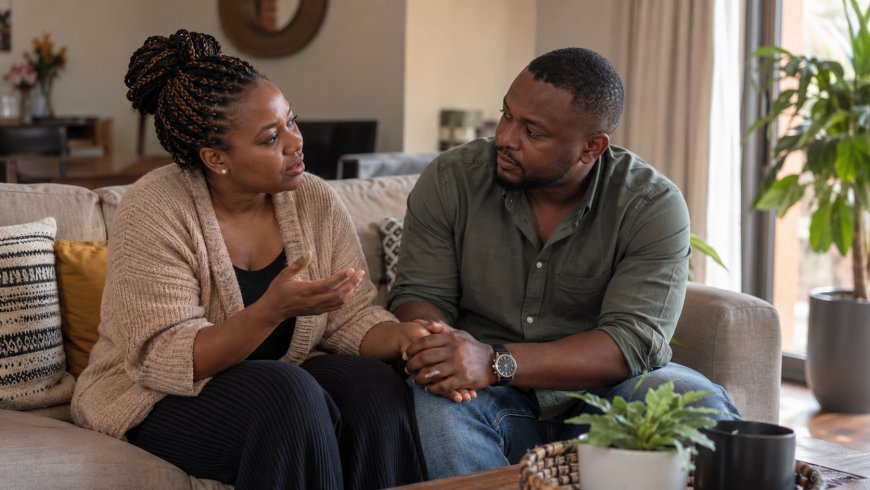
8. Learn How to Handle Triggers Without Turning Every Trigger Into a New Fight
Triggers are common after betrayal.
The betrayed spouse might suddenly feel anxious when their partner's phone rings.
They may become uncomfortable when their spouse works late.
They may need reassurance.
The goal isn't to shame the person for having the reaction.
But the goal also isn't to allow every trigger to become an endless cycle of accusation and defensiveness.
The couple can learn a different pattern:
Pause. Regulate. Return. Repair.
Your Marriage Reconnection Reset™ uses this kind of approach when conversations become activated: pause rather than escalate, regulate, return to the conversation, and then ask what happened and what each person contributed.
The question slowly changes from:
"Why are you doing this again?"
to:
"Something about this situation has brought the hurt back. Can we talk about what's happening for me?"
That is a very different conversation.
9. Don't Try to Rebuild the Old Marriage
This is one of the biggest shifts couples need to make.
You may desperately want your marriage to become what it was before the affair.
But sometimes the goal isn't to recreate the old relationship.
It is to build a healthier one.
That may mean having conversations you never had before.
Creating boundaries you never had before.
Talking about expectations.
Learning how each of you experiences emotional safety.
Becoming more intentional about intimacy.
Learning how to repair conflict rather than simply move past it.
Understanding the patterns underneath your marriage.
In other words:
Don't only ask, “How do we get back to normal?”
Ask:
“What kind of marriage do we want to build from here?”
That question opens a very different door.
10. Both People Have Work to Do
Rebuilding after infidelity cannot become a project where one person does all the emotional work.
The betrayed spouse may need to work through hurt, anger, fear, grief and eventually the possibility of trust.
The unfaithful spouse needs to take responsibility, understand the impact of their choices, demonstrate transparency and consistently participate in rebuilding safety.
And both partners may need to examine the relationship patterns that existed before the betrayal not to excuse the affair, but to understand what needs attention in the marriage going forward.
There is a difference between understanding the marriage and justifying the betrayal.
You can do the first without doing the second.
What If You Want to Stay but You Don't Know How to Trust Again?
You don't have to force yourself to make a lifelong emotional decision overnight.
Sometimes the first step is simply acknowledging:
"I am hurt."
"I don't trust you right now."
"I don't know what rebuilding looks like."
"But I am willing to understand whether rebuilding is possible."
That is enough for a starting point.
You don't have to pretend everything is fine.
You don't have to rush forgiveness.
You don't have to perform happiness for other people.
And you don't have to know exactly what the next five years look like.
Sometimes you begin with one honest conversation.
Then another.
Then another.
One consistent action.
One repaired conversation.
One kept promise.
One boundary.
One moment of vulnerability.
One decision to stop hiding.
Trust is rebuilt in moments.
What Should You Say to Your Spouse?
If you're the betrayed partner and you still want to explore rebuilding, you might say:
“What happened has changed how safe I feel in this marriage. I don't want us to pretend it didn't happen, and I don't want to spend the rest of our marriage punishing each other for it either. If we are going to rebuild, I need honesty, consistency, patience and a willingness from both of us to understand what happened and what needs to change. I don't know exactly how long this will take, but I want us to have an honest conversation about whether we are both willing to do the work.”
That conversation won't magically repair the marriage.
But it can begin something important:
clarity.
Can a Marriage Recover After Infidelity?
A marriage can sometimes move toward healing after infidelity, but there is no guaranteed timeline or guaranteed outcome.
The important question isn't simply:
“Can we forget the affair?”
It is:
“Are we both willing to understand what happened, take responsibility for our parts, create healthier boundaries, rebuild emotional safety and consistently practice a different way of relating?”
That is where the deeper work begins.
And sometimes professional support can help because couples get stuck in the same cycle: one person pursues answers, the other becomes defensive, the conversation escalates, someone shuts down, and nothing actually gets repaired.
A skilled marriage coach or appropriately qualified therapist can provide structure for conversations that couples struggle to navigate alone.
If there is abuse, coercion, threats or violence, relationship-rebuilding exercises should not be treated as a substitute for appropriate safety support.
Your Marriage May Need More Than Forgiveness
Forgiveness is often discussed as though it is the finish line.
But forgiveness by itself does not rebuild trust.
Trust requires evidence.
Evidence that honesty has replaced secrecy.
Evidence that boundaries are being respected.
Evidence that difficult conversations can happen without manipulation.
Evidence that promises are being kept.
Evidence that both people are willing to learn.
Evidence that the marriage is becoming emotionally safer.
You may eventually forgive your spouse and still need to rebuild trust.
You may still love your spouse while being deeply hurt by them.
You may want to rebuild and still have difficult days.
Those things can exist at the same time.
If You Both Want to Find Your Way Back
Maybe your marriage doesn't need another promise that “things will be different.”
Maybe it needs a structure for actually making things different.
Start small.
Talk about what happened.
Talk about what hurt.
Talk about what each of you needs now.
Identify the patterns that need to change.
Rebuild emotional safety.
Create new boundaries.
Practice transparency.
Make space for affection.
Learn how to repair.
And keep showing up.
Because rebuilding isn't one giant decision.
It is hundreds of small decisions that gradually communicate:
“You can trust what I say because you can see it in what I do.”
And if both of you are genuinely willing to do that work, the question doesn't have to be:
“Can we go back to who we were?”
It can become:
“Who can we become together from here?”
FAQ section
- Can trust be rebuilt after infidelity?
- How long does it take to rebuild trust after cheating?
- How do I trust my spouse again after infidelity?
- Can a marriage survive infidelity?
- How do you rebuild emotional intimacy after cheating?
- What should the unfaithful spouse do to rebuild trust?
- How do you stop overthinking after being cheated on?
A Next Step for Your Marriage
If you're reading this because your marriage has been affected by betrayal, emotional distance or a loss of connection, you don't have to figure everything out in one conversation.
Start by understanding where your marriage is today.
Take the Marriage Operating System Assessment
The assessment helps you look at the deeper systems underneath your marriage including communication, emotional connection, emotional safety, conflict and repair, intimacy, partnership and expectations.
[TAKE THE MARRIAGE OPERATING SYSTEM™ ASSESSMENT https://grace-n-grit-coaching-hub.kit.com/marriage-operating-system]
[DOWNLOAD THE FREE MARRIAGE RECONNECTION RESET →https://grace-n-grit-coaching-hub.kit.com/9bc1037ebe]
You don't have to recreate the marriage you had before. You can intentionally build the marriage you need in this season.
Ready to Work Through This Together?
Sometimes reading about rebuilding trust is helpful but when you're living through betrayal, you may need a safe space to talk through what is actually happening in your marriage.
You don't have to arrive with all the answers. You don't have to know whether everything can be repaired. You can simply come with the questions, the hurt, the confusion, and the desire to understand what your next step could look like.
A 1:1 Marriage Coaching Discovery Session with Grace N Grit gives you space to explore where your marriage is right now, understand the patterns affecting your connection, and identify the areas that may need intentional work.
You don't have to figure out the whole marriage today. Start with one honest conversation.
Book Your 1:1 Marriage Coaching Discovery Session
BOOK YOUR SESSION
here;https://book.gracengrit.info/]
Grace N Grit Coaching Hub Helping couples move from emotional distance, conflict and disconnection toward greater understanding, emotional safety and intentional connection.
Grace N Grit Coaching Hub
Heal. Grow. Thrive. The Grace N Grit Way.
What's Your Reaction?
 Like
0
 Dislike
0
 Love
0
 Funny
0
 Angry
0
 Sad
0
 Wow
0